KNOW YOUR SYSTEM
What Makes Up a Stormwater Drainage System
Stormwater drainage is everything that carries rain off your property. When one part of the chain blocks, water backs up to the next weakest point, so if you are dealing with blocked stormwater drains in Bendigo, it helps to know the pieces involved.
- Gutters and downpipes collect water from the roof and drop it into underground pipes.
- Pits and grates catch surface water from paths, courtyards and lawns.
- Driveway and strip drains intercept runoff across concrete before it reaches the garage or house.
- Agricultural drains, often called ag pipes, are slotted pipes laid in gravel to draw groundwater away from retaining walls and footings.
- The legal point of discharge is generally the approved point where stormwater leaves your property, typically at the kerb or into a drain in the street or an easement.
Your stormwater system must never be connected to the sewer. If you discover a downpipe plumbed into a sewer line, it can send large volumes of rain into pipes that were never meant to carry it, so it is worth having it corrected.
SEASONAL CAUSES
Why Stormwater Drains Block at Certain Times of Year
Stormwater problems across Central Victoria tend to follow the seasons.
- Autumn leaves. Deciduous street and garden trees shed leaves that wash into gutters and pits, then compact into a sodden mat inside the pipe.
- Summer storms. A heavy downpour after a long dry spell flushes months of dust, seed pods and debris into the system at once, often more than a partly blocked pipe can handle.
- Landscaping and building works. Soil, sand, mulch and cement slurry from a new garden, pool or extension can wash into nearby pits and settle in the pipe as a firm layer of silt.
- Tree roots. Stormwater pipes are often laid shallower than sewer lines, so roots from nearby trees find them easily, especially where joints have moved.
PROTECT YOUR FOOTINGS
Why Pooling Stormwater Near Your Home Is a Risk
When a stormwater line backs up, the water does not simply disappear. It spills from the nearest pit or the base of a downpipe and soaks into the soil beside the house. Persistently wet ground near footings can contribute to movement, cracked walls and sticking doors, particularly in reactive clay soils.
Other warning signs include gutters that overflow even though they look clean, water bubbling up from a pit during rain, eroded garden beds and damp patches or mould on internal walls. Water getting into a subfloor or garage is another sign the system is not coping.
HOW WE CLEAR IT
How We Clear Blocked Stormwater Drains in Bendigo
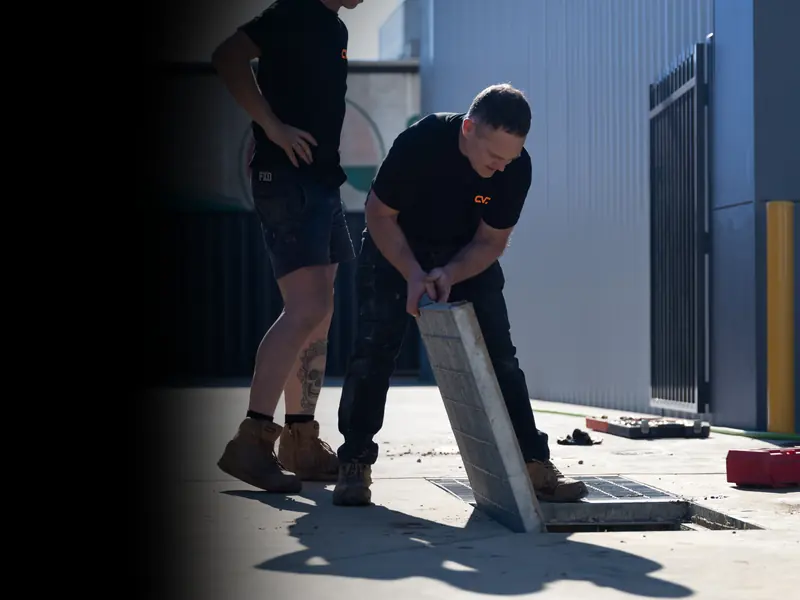
Stormwater blockages are usually packed with leaves, silt and fine roots rather than the grease and wipes found in a sewer. We start by working out where the water stops, lifting pit grates and checking downpipe connections to narrow down the blocked section.
The jetter is then worked through the pipe from the most suitable pit or downpipe, flushing debris along to the next access point or out towards the point of discharge. Strip drains and grated channels can be cleaned along their full length so they collect water properly again. Once the run is flowing, we test it with water to confirm rain will get away freely. If a line keeps blocking or runs beneath a slab or driveway, a CCTV drain inspection can show whether roots or a broken section are to blame.
BEFORE STORM SEASON
Maintaining Your Stormwater Drains Before Storm Season
The easiest time to deal with a stormwater drain is before the rain arrives. A little maintenance ahead of summer storms and again after the autumn leaf drop can save a lot of trouble.
- Clean gutters and check that leaf guards and downpipe outlets are clear.
- Lift pit grates and scoop out leaves, silt and rubbish.
- Keep soil, mulch and building materials away from grates and strip drains during any works.
- Run a hose into each downpipe and watch where the water comes out. Slow drainage or water backing up means the pipe needs attention.
For properties with large trees, long driveways or a history of overflows, our drain cleaning and maintenance service can keep pits and pipes flowing year round, or you can request a booking for a one-off clean before the wet weather.