Building and landscaping
Where all the silt comes from
In a suburb with so much construction and landscaping under way, soil and debris find their way into stormwater systems easily. Common culprits include:
- fine silt and sand washed off bare ground before turf or garden beds are established
- mulch, bark and pebbles carried into pits during heavy rain
- concrete slurry, render and offcuts left over from building works
- leaves and twigs from garden trees as they mature
This material settles at the low points of the system, usually the pits and the pipe runs between them, and gradually reduces how much water can get through.
On estates where neighbouring blocks are still being built, this can keep happening for a while. A pit cleared after your own landscaping may fill again as the rest of the street is finished.
Pits, grates and strip drains
Clearing driveway and strip drains
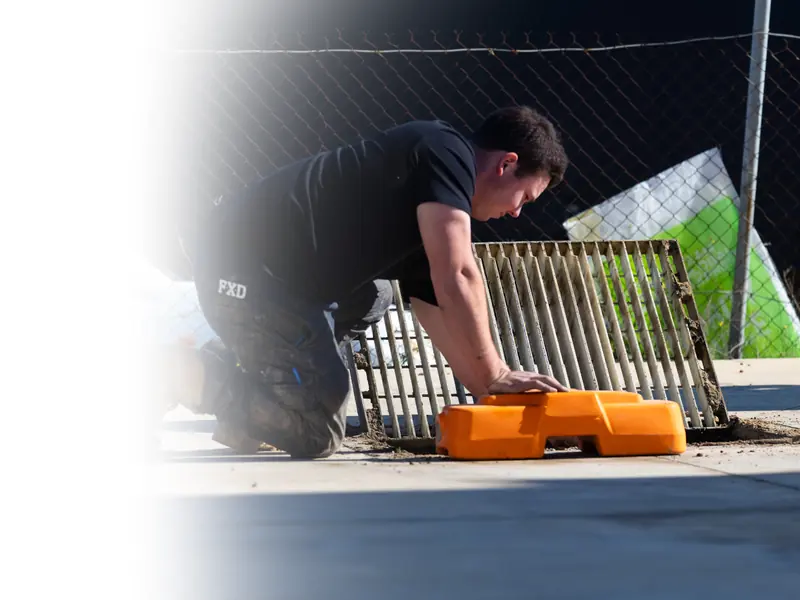
Strip drains across garage entries and grated pits in driveways are built to catch surface water quickly, but their narrow channels fill up just as quickly. Once the grate is lifted, we clean out the sump and jet the outlet pipe through to where it discharges.
Driveway grates catch more than water, too. Leaves, gravel, lawn clippings and the odd toy wash in after storms, and a grate cracked by car tyres lets larger debris drop straight into the pit.
On bigger blocks, stormwater pipes can run a fair way from the back of the house to the street, and a blockage near the boundary may show up as a problem much closer to home. Our blocked stormwater drain service covers the whole run, not just the visible pit. If water still backs up afterwards, a camera can check the pipe for a crushed section, a poorly sealed joint or roots coming in from a nearby garden bed.
Keep them separate
Stormwater and sewer are different systems
During renovations, extensions or pool and patio projects, downpipes sometimes end up connected where they should not be. As a general rule, stormwater must not be connected to the sewer system, because rainwater entering the sewer can overload it during storms.
If you are unsure where your downpipes and pits actually drain to, a camera inspection can trace each line and confirm it is running to the right place.
Many newer homes also have rainwater tanks with overflow pipes that join the stormwater system. If that overflow line blocks, water can back up around the tank or spill across the ground beside it.
Staying ahead
A clean-out before the wet months
Newer stormwater systems usually behave well once the garden has settled, but a clean-out after building or landscaping works is worth doing. Clearing pits and flushing the pipes before the wetter months means the system is ready when heavy rain arrives, and it is the simplest way to avoid blocked stormwater drains in Strathfieldsaye catching you out mid-storm.
Our drain cleaning and maintenance visits suit owners who would rather prevent a flooded backyard than deal with one, and Strathfieldsaye is only a short drive from our East Bendigo base.